Why We Re-Examine at 30 Days or Visit 12
🎉 New Patient Special: Full exam + X-rays if needed for only $29 (regular fee $189) — Marlboro, NJ
Book for $29 →Feeling Better Is a Good Sign — But It’s Not the Whole Story
One of the most common things I hear from patients is, “Dr. Chris, I feel so much better — do I really need to keep coming?” And I always smile, because that question actually gives me the perfect opportunity to explain one of the most important parts of our care process: the 30-day or visit 12 re-examination.
Here’s the truth I’ve learned after years of treating back pain, neck pain, and musculoskeletal conditions: how you feel and how you’ve actually healed are two very different things. Pain is one of the last signals your body sends when something is wrong — and unfortunately, it’s also one of the first signals to quiet down, even when underlying dysfunction is still present. That’s exactly why we built a formal re-evaluation checkpoint into every patient’s care plan here at HealthSource Chiropractic of Marlboro.
Why Pain Relief Doesn’t Always Equal Full Correction
Think of your spine like a tire on your car. If that tire is slightly misaligned, you might not feel the pull at first — but over thousands of miles, it wears unevenly and eventually fails. Back pain works the same way. Vertebral misalignments, restricted joint motion, and muscle imbalances can persist long after your pain has faded.
In my clinical experience, patients who stop care the moment they feel better are the ones I tend to see again — often with a more severe episode months down the road. The pain was the symptom. The underlying biomechanical dysfunction was the cause. And unless we verify through objective testing that the cause has been addressed, we’ve only done half the job.
This is especially true for common back pain triggers I see regularly here in Marlboro, including:
- -Prolonged sitting from long commutes or desk work
- -Repetitive strain from physical labor or athletic activity
- -Postural stress from looking down at phones and screens
- -Prior injuries that were never fully rehabilitated
-How We Objectively Measure Your Progress
-Movement and Range of Motion Testing
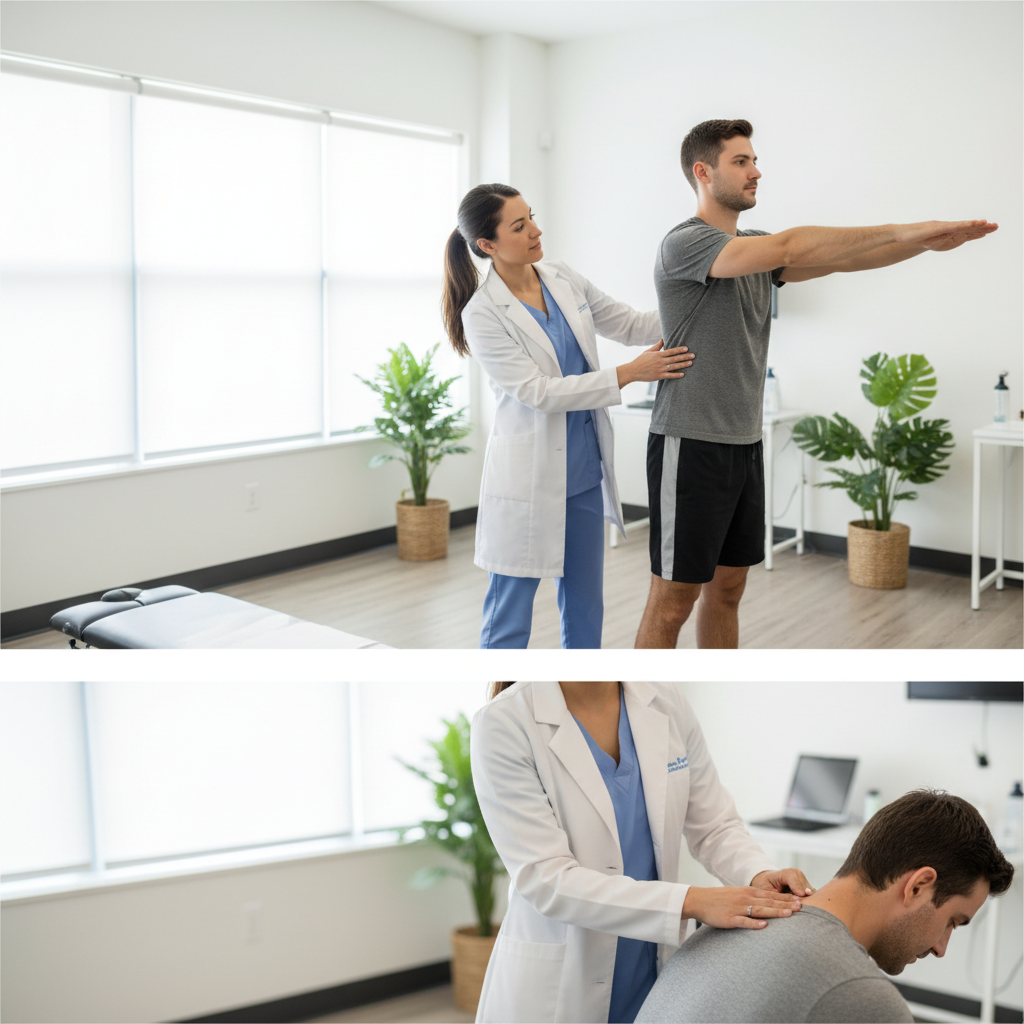
At your initial exam, we establish a baseline. We measure how far you can bend forward, extend back, rotate, and side-bend. We document where motion is restricted and where compensation patterns exist. At your 30-day or visit 12 re-exam, we repeat those exact same tests. The numbers don’t lie. If your lumbar flexion has improved from 40 degrees to 65 degrees, that’s objective, measurable progress — regardless of how you feel on any given day.
Orthopedic and Neurological Testing
We also re-administer specific orthopedic tests that help us identify whether the structures causing your back pain — discs, joints, nerve roots — are responding to care. Tests like the straight leg raise, Kemp’s test, and Valsalva maneuver give us clinical data that goes far beyond a pain scale of 1 to 10.
Postural and Functional Assessments
Posture tells a powerful story. At re-examination, we compare your posture photos and functional movement patterns to your initial findings. Are your hips leveling out? Is your head position improving over your shoulders? Are you able to perform basic movements like squatting or reaching without compensating? These are all signs that your nervous system and musculoskeletal system are re-patterning the way they should.
Patient-Reported Outcome Measures
We use validated outcome questionnaires — such as the Oswestry Disability Index for low back pain — to capture how your condition is affecting your daily life. Can you sleep through the night? Can you sit through a workday without pain? These standardized tools allow us to track your functional improvement in a way that’s consistent and evidence-based.
Why Your Care Plan May Change After Re-Evaluation
The re-exam isn’t just a formality — it’s a decision point. Based on what we find, one of several things may happen:
- You’re progressing well: We may transition you from acute corrective care to a maintenance or wellness schedule, reducing visit frequency.
Progress is slower than expected: We may adjust technique, add therapeutic modalities, or refer for imaging if we suspect an underlying issue we haven’t fully identified.
Ready to Feel Better? Start for Just $29
Your first visit includes a full exam + X-rays if needed for only $29 — regular fee $189. Same-day appointments available at our Marlboro, NJ clinic.
Valid for new patients only at participating locations. Due to federal regulations, this offer cannot be applied to patients enrolled in Medicare, Medicaid, or other federal healthcare programs. Not valid for ACN members. New Patient offer pricing varies by location. Insurance acceptance varies by location.
- New findings emerge: Occasionally, as one area of dysfunction resolves, another reveals itself. The re-exam catches these shifts before they become new complaints.
- You’ve met your goals: In some cases, patients are discharged with a home exercise program and an open invitation to return as needed.
The bottom line is this: your care should evolve with your body. A static treatment plan that never gets updated isn’t evidence-based care — it’s guesswork. I owe my patients better than that, and the re-examination is how I deliver it.
What Patients Can Expect at Their Re-Exam Visit
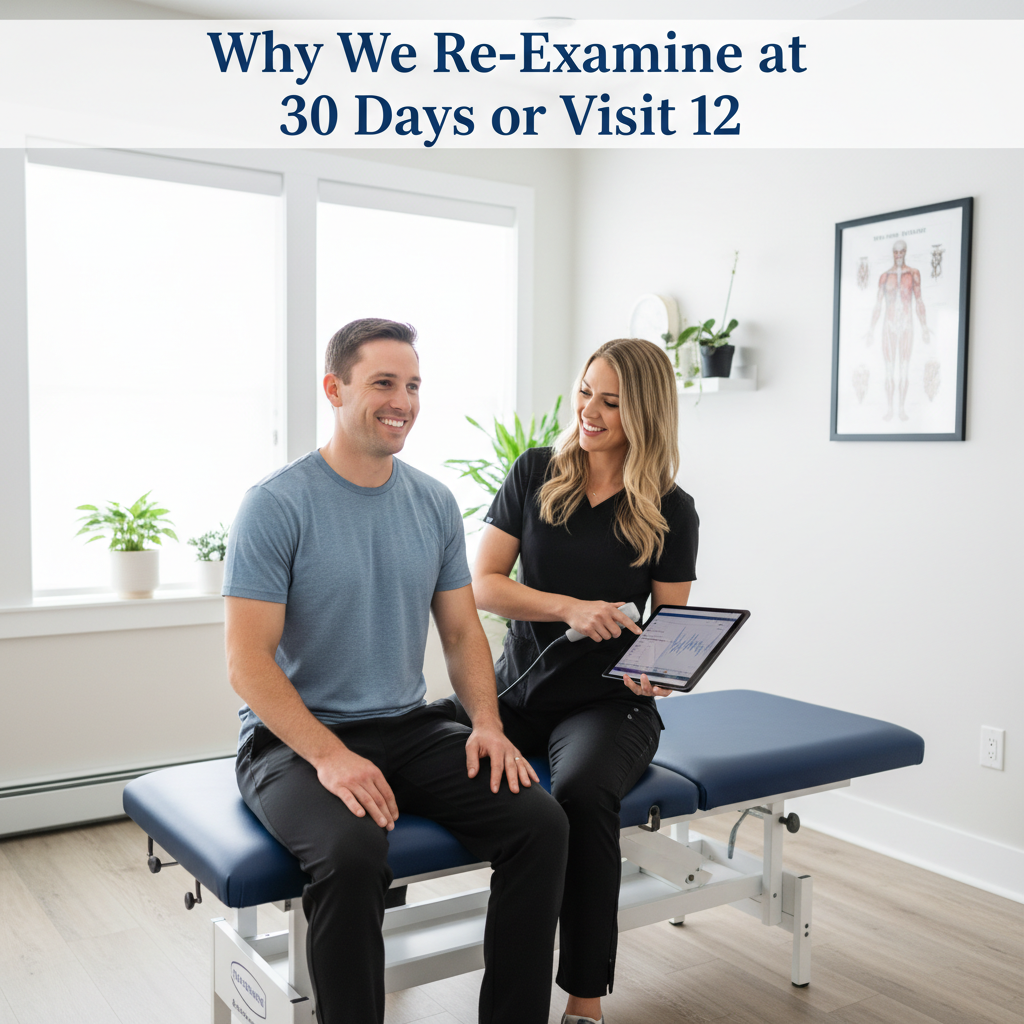
The 30-day re-exam typically takes a bit longer than a standard adjustment visit — usually 20 to 30 minutes. Here’s what we walk through together:
- -A review of your symptom changes and functional improvements since your first visit
- -Repeat range of motion and orthopedic testing
- -Postural comparison and movement assessment
- -A sit-down conversation where I explain what the findings mean in plain language
- -Updated care recommendations based on your progress and goals
I always take time at these visits to make sure patients understand why I’m recommending what I’m recommending. Informed patients make better decisions about their health. That’s a value I hold deeply in my practice here in Marlboro.
At-Home Habits That Support Your Progress Between Visits
What you do between adjustments matters enormously. Here are the recommendations I give most often to my back pain patients:
- Stay moving: Gentle walking for 20–30 minutes daily supports disc nutrition and joint mobility.
- Ice for acute flare-ups: 15–20 minutes of ice on the affected area can reduce inflammation without masking deeper healing.
- Strengthen your core: Simple exercises like dead bugs, bird dogs, and pelvic tilts build the muscular support your spine needs.
- Mind your workstation: If you work from home — which many Marlboro residents do — your monitor should be at eye level and your feet flat on the floor.
- Prioritize sleep position: Side sleeping with a pillow between your knees reduces spinal stress significantly.
Frequently Asked Questions
Why specifically at 30 days or visit 12?
Research and clinical experience both suggest that the initial tissue healing and neurological adaptation phase of chiropractic care takes approximately four to six weeks. By visit 12 or the 30-day mark, we have enough data to draw meaningful conclusions about how your body is responding. It’s the ideal window — not too early to see real change, not so late that we’ve wasted time on a plan that isn’t working.
What if I feel completely fine before the re-exam?
That’s wonderful — and I still want to see those objective test numbers confirm what you’re feeling. Remember, pain is a lagging indicator of dysfunction. If the re-exam confirms full resolution of the clinical findings, we may well discharge you or shift to a minimal maintenance schedule. But we make that call based on data, not just symptoms.
Will chiropractic care fix my back pain permanently?
Chiropractic care is highly effective at resolving episodes of back pain and addressing the underlying mechanical causes. For many patients, ongoing periodic care — much like dental cleanings — helps prevent recurrence. The re-exam helps us determine which category you fall into and recommend accordingly.
What happens if I’m not making progress?
Honest conversations are part of good clinical care. If objective findings show that you’re not responding as expected, I will tell you directly. We may adjust our approach, order imaging, co-manage with another provider, or refer out if appropriate. My goal is your best outcome — not keeping you in my office longer than necessary.
Is this re-exam approach standard in chiropractic care?
It should be — though not every practice does it consistently. At HealthSource Chiropractic, this structured re-evaluation is built into our clinical protocol because we believe in outcomes-based care. It keeps us accountable to you and ensures your treatment plan is always grounded in current, accurate findings.
Ready to Start Tracking Real Progress?
If you’ve been living with back pain in the Marlboro, NJ area and wondering whether chiropractic care is right for you, the first step is establishing your baseline. Schedule a comprehensive initial exam at HealthSource Chiropractic of Marlboro so we can measure where you’re starting from — and give you the roadmap to get where you want to be. Don’t just chase pain relief. Chase correction, function, and lasting health. That’s what we’re here to help you achieve.
“The goal of care isn’t just to feel better temporarily — it’s to verify through objective testing that your body has actually healed and is functioning the way it should.” — Dr. Christopher Ernst, HealthSource Chiropractic of Marlboro