
The Difference Between Feeling Better and Moving Better
🎉 New Patient Special: Full exam + X-rays for only $29 — Marlboro, NJ
Book for $29 →The Illusion of Relief: Why Feeling Better Is Only Half the Battle
In my years of clinical practice, I have seen a recurring pattern that I believe is one of the biggest hurdles to long-term health. A patient walks into HealthSource Chiropractic of Marlboro with acute back pain, perhaps so severe they are walking with a visible limp. After a few targeted adjustments and some soft tissue work, they come back for their third or fourth visit with a beaming smile. I feel great, Dr. Chris! they say. And while I celebrate every win with my patients, I often have to share a difficult truth: feeling better is not the same thing as being better.
This distinction is the difference between a temporary patch and a permanent solution. When you are in pain, your brain is sending an alarm signal. When that pain subsides, it simply means the alarm has been turned off. It does not necessarily mean that the underlying structural or functional issue that triggered the alarm has been resolved. In this comprehensive guide, I want to dive deep into the clinical philosophy we use at HealthSource, explaining why we prioritize functional improvement over mere symptom relief and how this approach saves you from a cycle of chronic relapses.
Symptom Improvement vs. Functional Improvement
To understand the difference, we have to look at the hierarchy of the body. Symptoms are your body’s last resort. Pain is usually the very last thing to show up when something is wrong and the first thing to disappear once you start moving in the right direction. If we only use pain as our guide, we are essentially managing our health like a game of Whac-A-Mole.
Functional improvement, on the other hand, refers to the restoration of normal physiological processes. This includes joint range of motion, muscle activation patterns, and nervous system efficiency. Imagine your body is like a car. If the alignment is off, your tires will wear down unevenly. You might not feel a vibration in the steering wheel yet, but the damage is happening. Symptom relief is like putting on a new set of tires; they look good and the ride feels smoother for a week. Functional improvement is like fixing the alignment so the tires don’t wear out in the first place.
Why Movement Quality Predicts Your Future
As a chiropractor, I am often more interested in how you move than how you feel today. Why? Because movement quality is the greatest
predictor of future injury. If you have a restricted hip or a stiff thoracic spine, your body will seek movement elsewhere to accomplish your daily tasks. This is what we call a compensatory pattern. Even if you don’t feel pain right now, these poor movement patterns are placing excessive stress on your discs, ligaments, and tendons.
Movement is medicine, but poor movement is a slow-acting poison to the musculoskeletal system.
When we evaluate patients in Marlboro, we look for these red flags. If we see that a patient can’t perform a basic squat without their knees collapsing or their low back rounding, we know that regardless of their current pain level, they are at high risk for a future episode of back pain or a disc herniation. By addressing the quality of movement, we aren’t just getting you out of pain; we are bulletproofing your body against the rigors of life, whether that is commuting on the Parkway or playing a round of golf at one of our local Monmouth County courses.
The Hidden Danger: Common Compensations
Compensations are the body’s way of cheating to get a job done. The human brain is incredibly clever; it will find a way to pick up that grocery bag or pick up your grandchild, even if your primary muscles aren’t firing correctly. Here are a few common compensations we see every day at
HealthSource Chiropractic of Marlboro:
- Low Back Overactivity: When the glutes are weak (often from too much sitting at a desk), the lower back muscles take over during walking or lifting. This leads to that chronic, dull ache that many people just accept as getting older.
- Neck Tension: If your upper back (thoracic spine) is rounded and stiff, your neck has to over-extend just so you can look straight ahead. This is a primary driver of tension headaches.
- Hip Imbalances: If one hip is tighter than the other, your pelvis will tilt when you walk, forcing your lumbar spine to shear and rotate with every step.
The danger here is that you might feel the pain in your neck or your back, but the cause is the lack of movement in your hips or mid-back. If we only treat the spot that hurts, we are ignoring the architect of the problem.
Ready to Feel Better? Start for Just $29
Your first visit includes a full exam + X-rays for only $29. Same-day appointments available at our Marlboro, NJ clinic.
The Value of Objective Re-testing
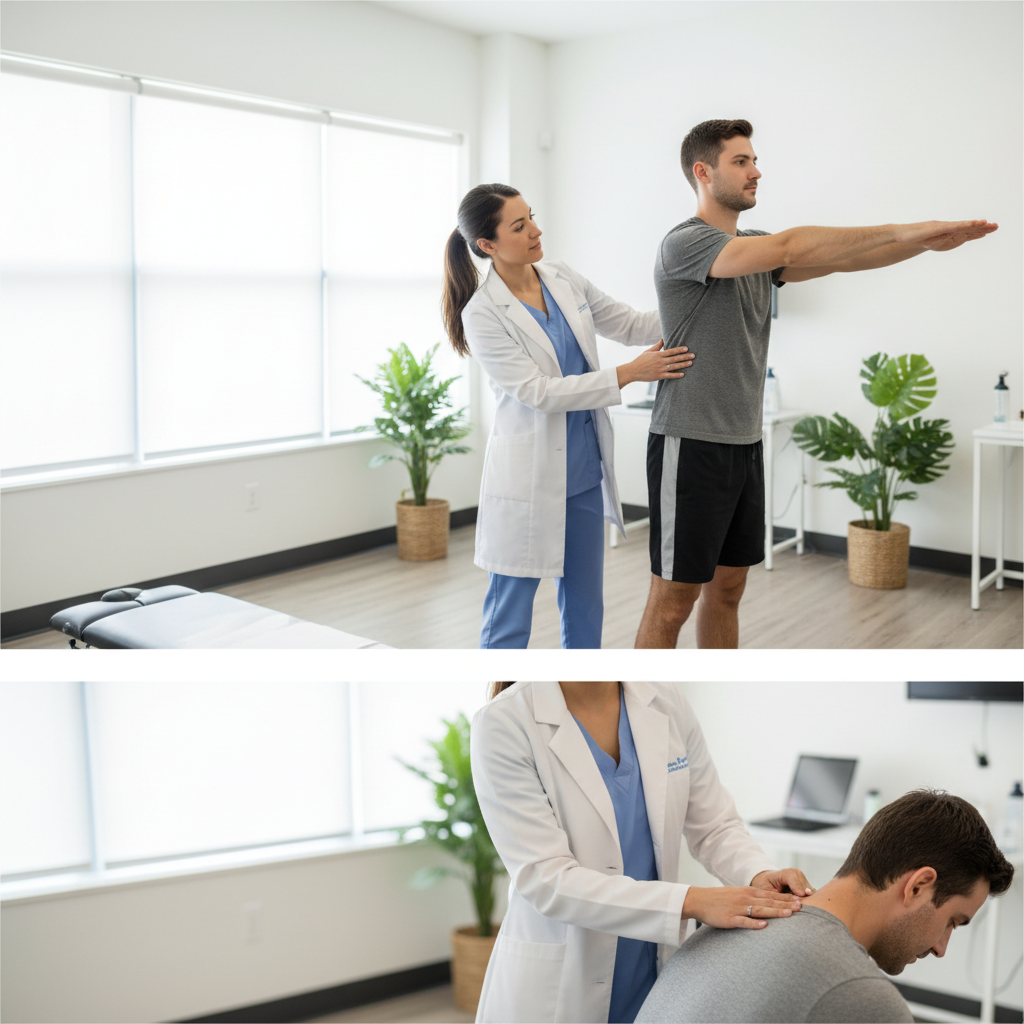
In our clinic, we don’t guess—we measure. This is where the Experience and Expertise of the HealthSource team come into play. We use objective testing to track your progress. While your subjective feedback (I feel 50 percent better) is important, we back it up with hard data. We look at:
- Range of Motion (ROM): Digital measurements of how far your joints can move compared to normal physiological standards.
- Functional Movement Screens: Specific tests that challenge your balance, stability, and mobility.
Muscle Strength Testing: Ensuring that the muscles responsible for stabilizing your spine are actually firing.
Re-testing is vital because it provides a roadmap. If a patient tells me they feel 100 percent better but their objective re-test shows they still have a 20 percent deficit in hip rotation, I know they aren’t done with care. If they stop now, they will likely be back in my office in three months with the same issue. Objective data allows us to transition from relief care to corrective care with confidence.
The HealthSource Marlboro Approach to Back Pain
Our approach is a synergy of chiropractic adjustments and progressive rehabilitation. The adjustment is designed to restore motion to restricted spinal segments and reset the nervous system. Think of it as hitting the reset button on a computer that has frozen. However, if we don’t change the software—your movement patterns—the computer will eventually freeze again.
That is why our rehab protocols are so intensive. We teach your brain how to use your muscles correctly again. For our Marlboro neighbors, this means personalized care plans that reflect your lifestyle. If you spend hours in the car commuting to the city, our focus will be different than if you are a high school athlete at Marlboro High or an active senior enjoying the parks in Manalapan and Colts Neck.
Actionable At-Home Tips for Better Movement
While professional care is essential, there are things you can do daily to improve your movement quality and support your chiropractic care:
- The Bruegger’s Relief Position: Every 30 minutes of sitting, stand up, pull your shoulders back and down, turn your palms out, and take three deep belly breaths. This reverses the desk posture.
- Hip Hinging: Practice bending at the hips rather than the waist when you reach for things. This protects the lumbar discs and engages the powerful glute muscles.
- Controlled Articular Rotations (CARs): Gently move your neck and shoulders through their full range of motion every morning to keep the joints lubricated.
Frequently Asked Questions
1. Why did my back pain come back even though I felt fine last week?
This usually happens because the underlying movement dysfunction was never fully corrected. You felt better because the inflammation subsided, but as soon as you returned to your normal activities, the poor movement patterns re-irritated the tissue.
2. How do I know if I am moving better?
Beyond just a lack of pain, you should notice that daily tasks feel easier. You might find it easier to put on your shoes, turn your head to check your blind spot while driving on Route 9, or stand for longer periods without fatigue.
3. What is a functional evaluation?
A functional evaluation is a series of physical tests we perform at HealthSource Marlboro to see how your joints and muscles work together. It’s not just about where it hurts; it’s about how you move as a whole unit.
4. Can I just do the exercises and skip the adjustments?
While exercises are great, if a joint is physically restricted or stuck, you cannot effectively exercise through that restriction. The adjustment clears the path so that the exercises can actually work.
5. How long does it take to change a movement pattern?
Neuroplasticity takes time. While pain can change in a day, changing a habit or a movement pattern typically takes 6 to 12 weeks of consistent corrective work and adjustments.
Discover How Your Body Is Actually Moving
If you have been living with recurring back pain, or if you simply want to ensure you are moving at your peak potential, it is time for an objective look at your health. At HealthSource Chiropractic of Marlboro, we are committed to helping you not just feel better, but move better for the long haul. Book an evaluation with us today to discover the true state of your functional health and take the first step toward a more active, pain-free life.