How We Measure Progress in Kids
🎉 New Patient Special: Full exam + X-rays for only $29 — Marlboro, NJ
Book for $29 →Why Measuring Progress in Kids Is Different Than in Adults
As a chiropractor who has worked with many children and families, one of the questions I hear most often from parents is: “How do we know if it’s actually working?” It’s one of the best questions a parent can ask, and honestly, it’s one I love answering. Because when it comes to kids, progress isn’t always as obvious as the absence of pain. Children are resilient — they often don’t complain the way adults do — which means we need objective, measurable tools to truly track how their developing bodies are responding to care.
Kids are not just small adults. Their nervous systems are rapidly developing, their posture is being shaped by daily habits and activities, and their musculoskeletal systems are in a constant state of growth. That’s why at HealthSource Chiropractic of Marlboro, we use a series of specific assessments to track meaningful, real-world progress in our pediatric patients. These aren’t guesses or gut feelings — they’re structured re-examinations built around what matters most for a child’s long-term health and development.
What We’re Actually Looking For: The Root Causes of Poor Movement in Kids
Before I explain how we measure progress, it’s important to understand why so many children come to see us in the first place. In my clinical experience, the most common underlying causes of movement dysfunction and postural issues in kids include:
- Birth trauma and early spinal stress — Even a routine delivery can place significant pressure on a newborn’s cervical spine and nervous system.
- Tech posture — Hours spent hunched over tablets, phones, and laptops is creating what I call a posture crisis among school-age children in communities like Marlboro and surrounding Monmouth County.
- Sedentary lifestyles — Kids who aren’t moving enough develop weak stabilizing muscles, which throws off their balance and coordination.
- Sports injuries and overuse — From recreational soccer to competitive travel teams, young athletes here in central NJ are dealing with repetitive stress injuries at increasingly younger ages.
- Backpack load and desk ergonomics — Improper carrying habits and poorly set-up workstations at school or home compound spinal stress over time.
When these factors go unaddressed, they don’t just cause discomfort — they can interfere with neurological development, athletic performance, concentration, and even sleep. That’s why early detection and objective monitoring are so important.
Our Pediatric Progress Measurement Framework
Every child who comes into our Marlboro office receives a thorough initial assessment, and then at regular intervals throughout their care, we perform structured re-examinations. Here’s exactly what we look at:
Postural Improvements
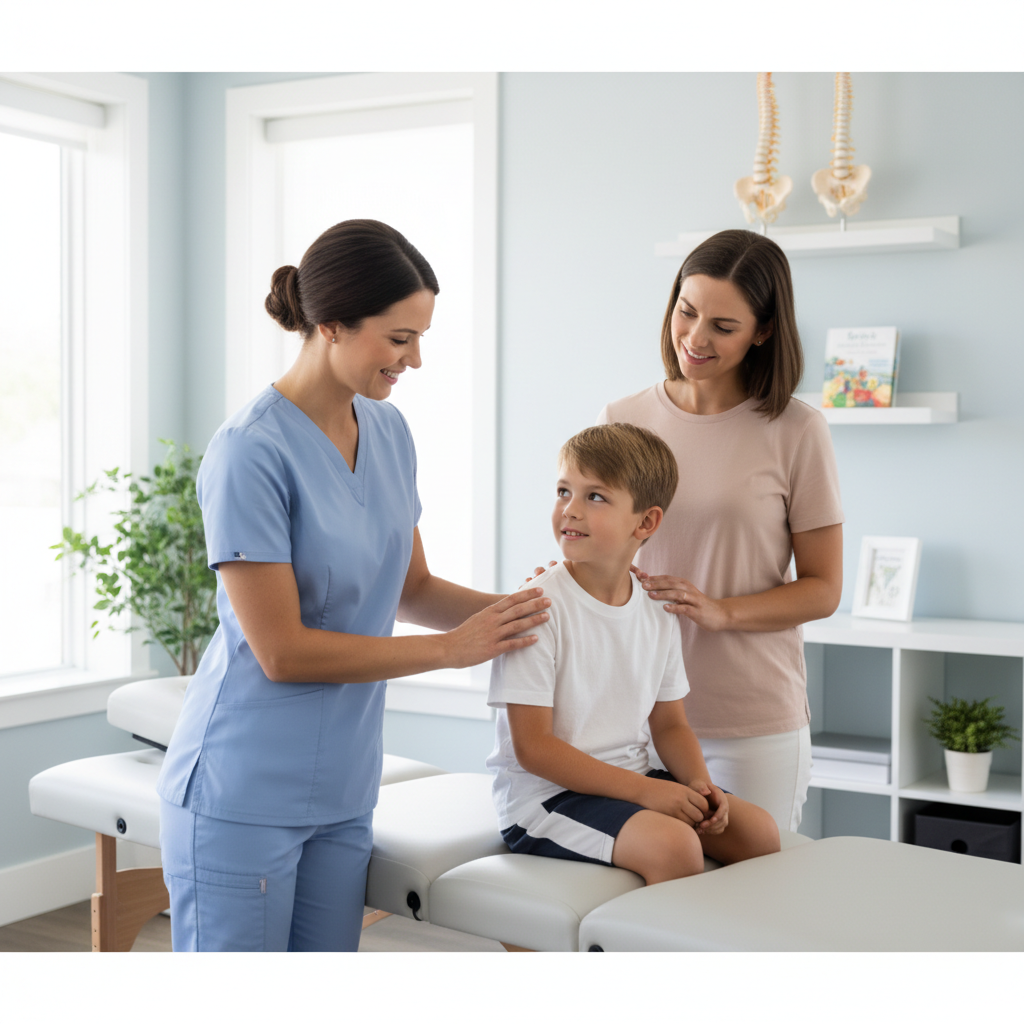
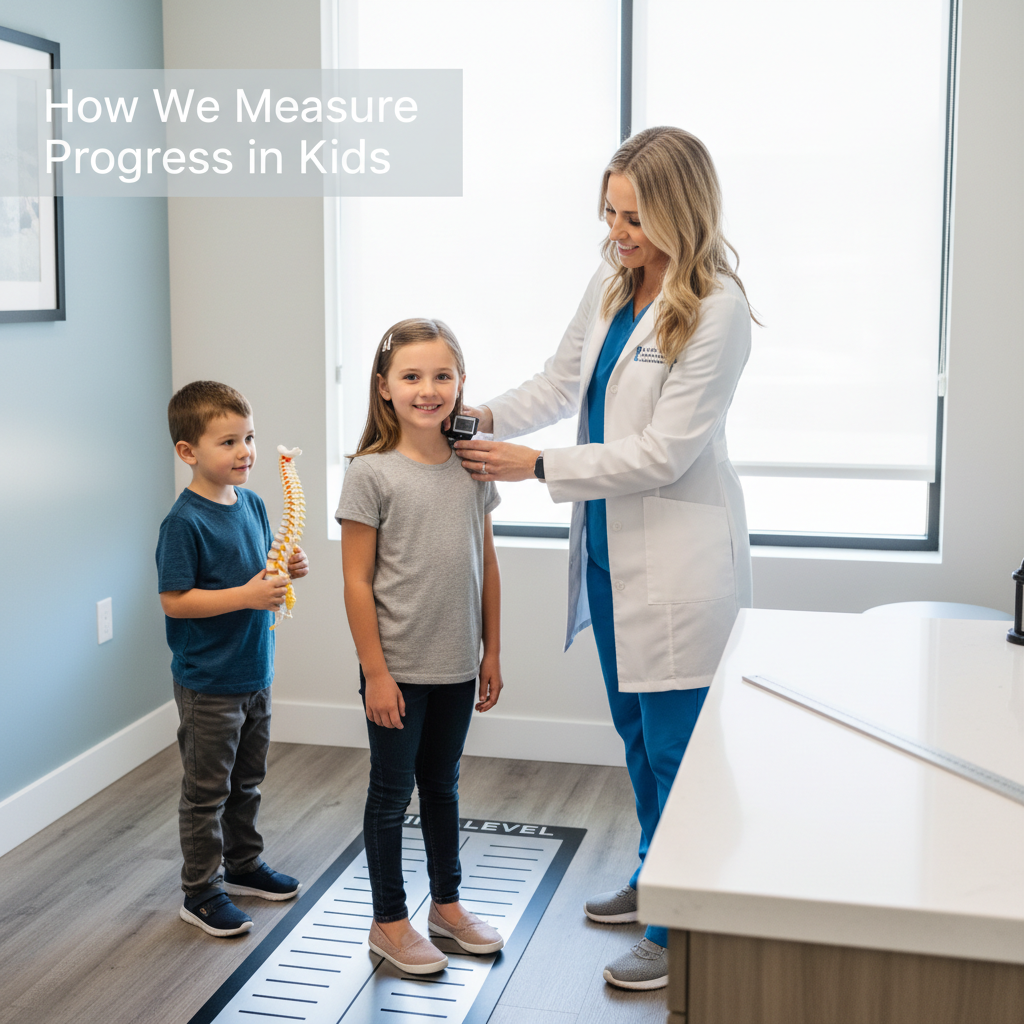
Posture is one of the most visible and measurable indicators of spinal health in children. During each re-exam, I conduct a visual and instrument-assisted postural analysis that looks at:
- Head position relative to the shoulders (forward head posture)
- Shoulder height and leveling
- Spinal curvature in standing and seated positions
- Hip balance and pelvic alignment
We often use postural photography to give parents a side-by-side comparison from the start of care to the present. When a child who came in with a noticeably forward head posture and rounded shoulders is now standing upright and balanced — that’s something a parent can see with their own eyes. These visual comparisons are powerful because they make the invisible visible.
“I remember one 9-year-old patient whose head was so far forward on initial intake that it looked like he was perpetually looking at the floor. After three months of consistent care and home exercises, his postural photos showed a dramatic improvement — and his teacher had started commenting that he seemed more confident in class.”
Stability and Balance Testing
The ability to balance and stabilize the body is directly tied to how well the nervous system is communicating with the musculoskeletal system. I use standardized balance assessments — including single-leg stance tests and dynamic movement challenges — to measure how a child’s proprioception and core stability are developing over time.
For younger kids, I make these tests fun and game-like so they’re engaged rather than anxious. For our athletic patients, I incorporate sport-specific balance challenges. A child who could barely hold a single-leg stance for three seconds at intake but can now maintain it for 15 seconds with good control? That’s measurable, documented neurological progress.
Functional Movement Re-Tests
I’m a firm believer that how a child moves tells us more than almost any other metric. We perform functional movement screenings at re-exams that look at:
- Squat mechanics and symmetry
- Gait patterns and stride balance
- Overhead reach and shoulder mobility
- Core activation and spinal flexion/extension ranges
These tests are repeated under the same conditions at each re-exam, giving us a clear before-and-after picture. Improvements in movement quality — smoother, more symmetrical, fuller range of motion — are objective indicators that the joints, muscles, and nervous system are working better together.
Ready to Feel Better? Start for Just $29
Your first visit includes a full exam + X-rays for only $29. Same-day appointments available at our Marlboro, NJ clinic.
Why Re-Exams Are the Backbone of Intelligent Pediatric Care
Some parents ask me, “If my child feels fine, why do we need re-exams?” Here’s my honest answer: because feeling fine and functioning optimally are not the same thing.
Re-examinations serve several critical purposes in pediatric chiropractic care:
- They guide care decisions — If a child is progressing well, we may be able to extend the time between visits or transition to maintenance care. If progress has plateaued, we adjust our approach.
- They catch regressions early — Growth spurts, new sports seasons, or changes in school schedules can create setbacks. Re-exams help us identify these early rather than waiting for symptoms to develop.
- They validate the plan — Every parent deserves to know that the care their child is receiving is actually working. Objective re-exam data provides that reassurance with evidence, not just words.
- They empower the child — When kids can see their own progress on a chart or in a photo, they become more motivated participants in their own health. I’ve watched children become genuinely excited about their results.
What Parents Can Expect During a Re-Exam Visit
Re-exams at our Marlboro office typically take 20–30 minutes and are built right into a child’s ongoing care schedule. Here’s what the process looks like:
- A brief parent and child check-in about any changes in symptoms, activity, or lifestyle
- Postural reassessment and comparison to baseline photos or measurements
- Balance and stability re-testing using the same standardized protocol
- Functional movement re-screening
- Review of findings with the parent, including clear explanations of what has improved and what still needs attention
- Updated care plan recommendations based on the data
I always make sure parents leave re-exams with a clear understanding of where their child stands and what the next phase of care looks like.
Transparency and communication are non-negotiables in my practice.
At-Home Tips to Support Your Child’s Progress Between Visits
What happens in our office is only part of the equation. Here’s what I recommend to the families I see throughout Marlboro, Manalapan, Freehold, and surrounding areas:
- Daily movement breaks — Encourage your child to take breaks from screens every 30–45 minutes to stand, stretch, and move.
- Posture check-ins — Gently remind kids to sit tall, especially during homework time. Consider a lumbar support cushion for desk chairs.
- Balance practice — Simple activities like standing on one foot while brushing teeth or doing balance beam walks on a curb can meaningfully improve proprioception.
- Backpack habits — Make sure your child is wearing both straps and that the backpack weight is no more than 10–15% of their body weight.
- Sleep positioning — Encourage back or side sleeping with a supportive pillow appropriate for a child’s size.
- Do the home exercises — When I prescribe specific corrective exercises, consistency at home makes a significant difference in how quickly children progress.
Frequently Asked Questions
How often should my child have a re-exam?
In most cases, I recommend a formal re-examination every 8–12 visits, or roughly every 4–6 weeks during the active phase of care. As a child progresses and transitions to wellness or maintenance care, re-exams may be scheduled quarterly. Every child is different, and I tailor the frequency to the individual’s needs and goals.
My child doesn’t have any pain. Do they still need chiropractic re-exams?
Absolutely. Spinal misalignment, poor posture, and movement dysfunction often exist without pain — especially in children whose nervous systems are more adaptable. Many of the most significant postural and movement problems I see in adults started in childhood and went unnoticed because there was no pain. Re-exams help us identify and address these issues early.
What age can children start receiving chiropractic assessments?
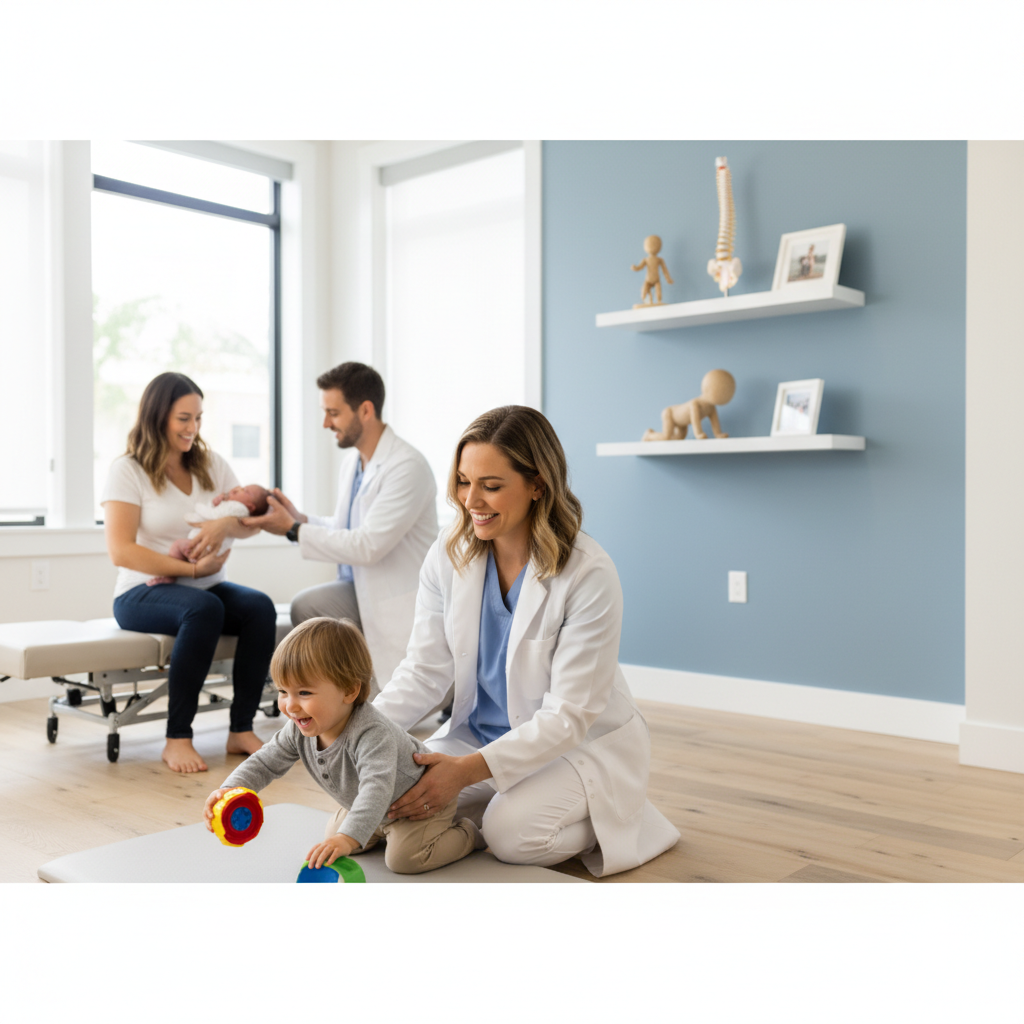
We work with children from newborns through teenagers. Pediatric chiropractic care is gentle, safe, and adapted to each child’s developmental stage. Newborn assessments use very light fingertip pressure — nothing like an adult adjustment — and are focused on detecting early neurological and spinal stress from the birth process.
How do I know if my child needs a pediatric movement assessment?
Some signs that warrant an evaluation include: poor posture, one shoulder sitting higher than the other, frequent headaches, complaints of back or neck pain, difficulty concentrating, coordination challenges, or a recent sports injury. Even if none of these apply, a baseline movement assessment is a valuable tool for any growing child.
Will insurance cover pediatric chiropractic re-exams?
Coverage varies depending on your plan. Our front desk team at HealthSource Chiropractic of Marlboro is happy to verify your benefits before your child’s appointment so there are no surprises. We also offer flexible options to make care accessible for families.
How long does it typically take to see measurable progress in kids?
In my experience, many children begin showing measurable improvements in posture and balance within 4–8 weeks of consistent care combined with at-home recommendations. That said, the timeline depends on the nature of the issue, the child’s age, and how consistently they follow through with home care. Re-exams keep us honest and on track regardless of how quickly or gradually progress unfolds.
Ready to Track Your Child’s Movement Health? Let’s Get Started.
If you’re a parent in Marlboro, Manalapan, Freehold, or anywhere in the Monmouth County area and you want to know how your child’s spine, posture, and movement are really developing, I’d love to help. At HealthSource Chiropractic of Marlboro, we don’t guess — we measure, we track, and we adjust our approach based on real data so your child gets the most effective care possible.
Schedule a pediatric movement assessment today and give your child the foundation for a lifetime of healthy movement. Call our Marlboro office or request an appointment online — our team is here to answer your questions and get your child on the path to better movement health.