Growth Spurts and Injury Risk in Young Athletes
🎉 New Patient Special: Full exam + X-rays if needed for only $29 (regular fee $189) — Marlboro, NJ
Book for $29 →As a chiropractor at HealthSource Chiropractic of Marlboro, I have the privilege of working with a wide range of patients, from office workers in Manalapan to active retirees in Colts Neck. However, some of my most rewarding work involves our local youth athletes. Whether they are tearing up the soccer fields at Vanderburg Park or preparing for a competitive season at Marlboro High School, these young competitors bring incredible energy to their sports. But as any parent of a teenager knows, there is a specific window of time where that grace and speed seem to vanish overnight, replaced by a period of clumsiness and frequent complaints of ‘growing pains.’ This is the peak growth phase, and as a healthcare professional, I see it as a critical period where injury risk skyrockets if not managed correctly.
In my clinical experience, the transition from a child’s body to an adult’s body is not a linear, smooth process. It is often a series of rapid shifts that leave the nervous system and the musculoskeletal system playing a constant game of catch-up. Today, I want to share my insights into why these growth spurts are so taxing on the body and how we, as a community of parents and providers in Marlboro, can protect our young athletes — from the town’s youth soccer, baseball, and lacrosse leagues to varsity teams — during these vulnerable years.
Understanding the Biology of the Growth Spurt
To understand the injury risk, we first have to look at what is happening under the surface. During a growth spurt, the long bones of the arms and legs—the femur, tibia, and humerus—often grow at a rate that outpaces the surrounding soft tissues. Think of it like this: the ‘chassis’ of the car is getting longer, but the ‘cables’ (the muscles, tendons, and ligaments) are still the same length. This creates a significant amount of tension at the points where these tendons attach to the bone.
This tension is the primary cause of many common adolescent injuries. Because the muscles are being stretched thin, they become tighter and less flexible. This tightness pulls on the growth plates—the areas of developing cartilage near the ends of the bones. Because growth plates are weaker than the surrounding bone and ligaments, they are often the first things to give way under stress. This is why we see a high prevalence of conditions like Osgood-Schlatter disease (knee pain) and Sever’s disease (heel pain) during these peak growth years.
The Phenomenon of Adolescent Awkwardness
Have you ever noticed your star athlete suddenly look like they have forgotten how to run? This isn’t just a lack of focus; it is a neurological phenomenon often referred to as ‘adolescent awkwardness.’ When the limbs suddenly lengthen, the brain’s internal map of the body—its proprioception—becomes outdated. The brain still thinks the legs are 30 inches long when they are now 32 inches. This discrepancy leads to temporary decreases in stability, balance, and coordination.
The brain is essentially trying to operate a new, larger body with an old software program. Until the nervous system recalibrates, the athlete is at a much higher risk for acute injuries like ACL tears or ankle sprains because their landing mechanics and change-of-direction movements are no longer precise.
In my practice, I find that this is the moment when additional monitoring is most helpful. By identifying these deficits in coordination early, we can intervene before a simple stumble becomes a season-ending injury.
Common Injuries We See in Youth Athletes
During these growth phases, we typically see a spike in two types of injuries: overuse injuries and traumatic ligamentous injuries. Overuse injuries occur because the tight muscles are constantly tugging on those sensitive growth plates. Traumatic injuries occur because the athlete’s center of gravity has shifted, and their muscles aren’t yet strong enough to stabilize their new height.
- Osgood-Schlatter Disease: Inflammation of the area just below the knee where the patellar tendon attaches to the shinbone.
- Sever’s Disease: Heel pain caused by the Achilles tendon pulling on the growth plate of the calcaneus (heel bone).
- ACL and Meniscus Tears: Increased risk due to changes in ‘valgus’ stress (the knees caving inward) during jumping and landing.
- Stress Fractures: Often seen in the feet or lower legs when the bones are maturing and cannot yet handle the increased leverage and impact of a larger body.
The Chiropractic Approach to Growth-Phase Management
Many parents ask me, ‘Why should I take my child to a chiropractor for growth spurts?’ The answer lies in the relationship between the structure of the body and the function of the nervous system. At HealthSource Chiropractic of Marlboro, our goal is to ensure that as the body grows, it stays in optimal alignment so that the ‘cables’ aren’t pulled tighter than they need to be.
Ready to Feel Better? Start for Just $29
Your first visit includes a full exam + X-rays if needed for only $29 — regular fee $189. Same-day appointments available at our Marlboro, NJ clinic.
Valid for new patients only at participating locations. Due to federal regulations, this offer cannot be applied to patients enrolled in Medicare, Medicaid, or other federal healthcare programs. Not valid for ACN members. New Patient offer pricing varies by location. Insurance acceptance varies by location.
Biomechanical Assessment and Spinal Alignment
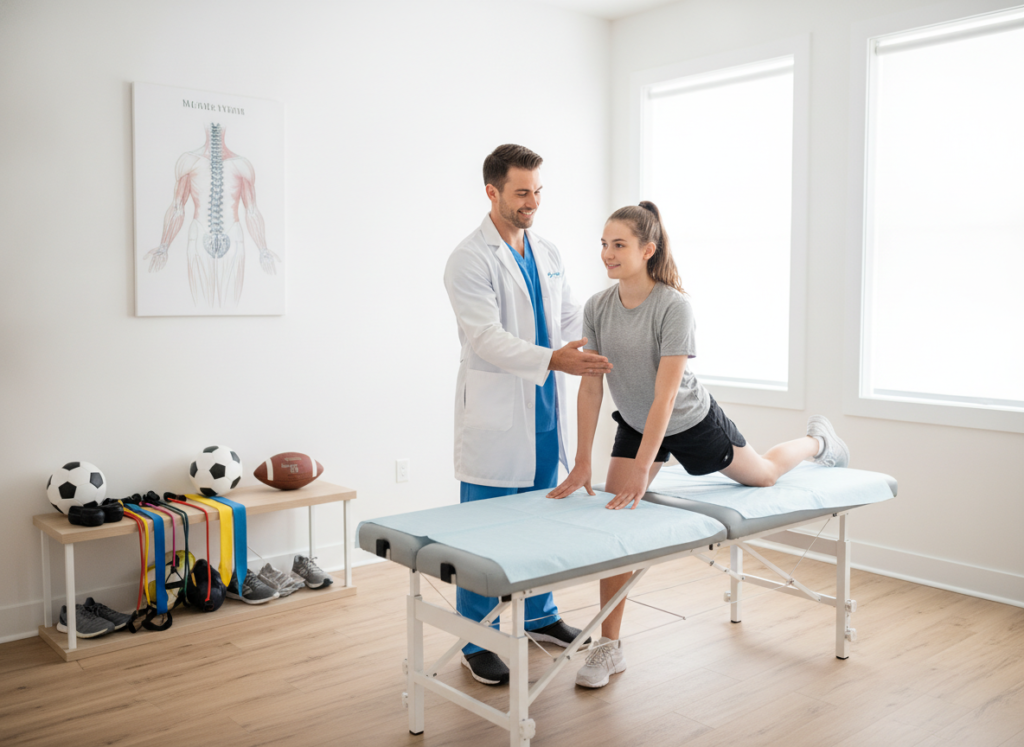
We begin with a comprehensive movement assessment. I look at how the athlete moves through space—their gait, their squat form, and their spinal alignment. If the spine or pelvis is misaligned, it can create an uneven pull on the legs, making one side work harder than the other. By performing gentle, age-appropriate chiropractic adjustments, we ensure the pelvis and spine are balanced, which reduces asymmetrical stress on the growing limbs.
Neuromuscular Re-education
Beyond the adjustment, we focus on ‘re-mapping’ the brain. We use specific exercises designed to improve proprioception and balance. By challenging the nervous system to recognize the body’s new dimensions, we help the athlete regain their coordination faster. This ‘re-calibration’ is essential for preventing the awkward landings that lead to ligament tears.
Soft Tissue Therapy
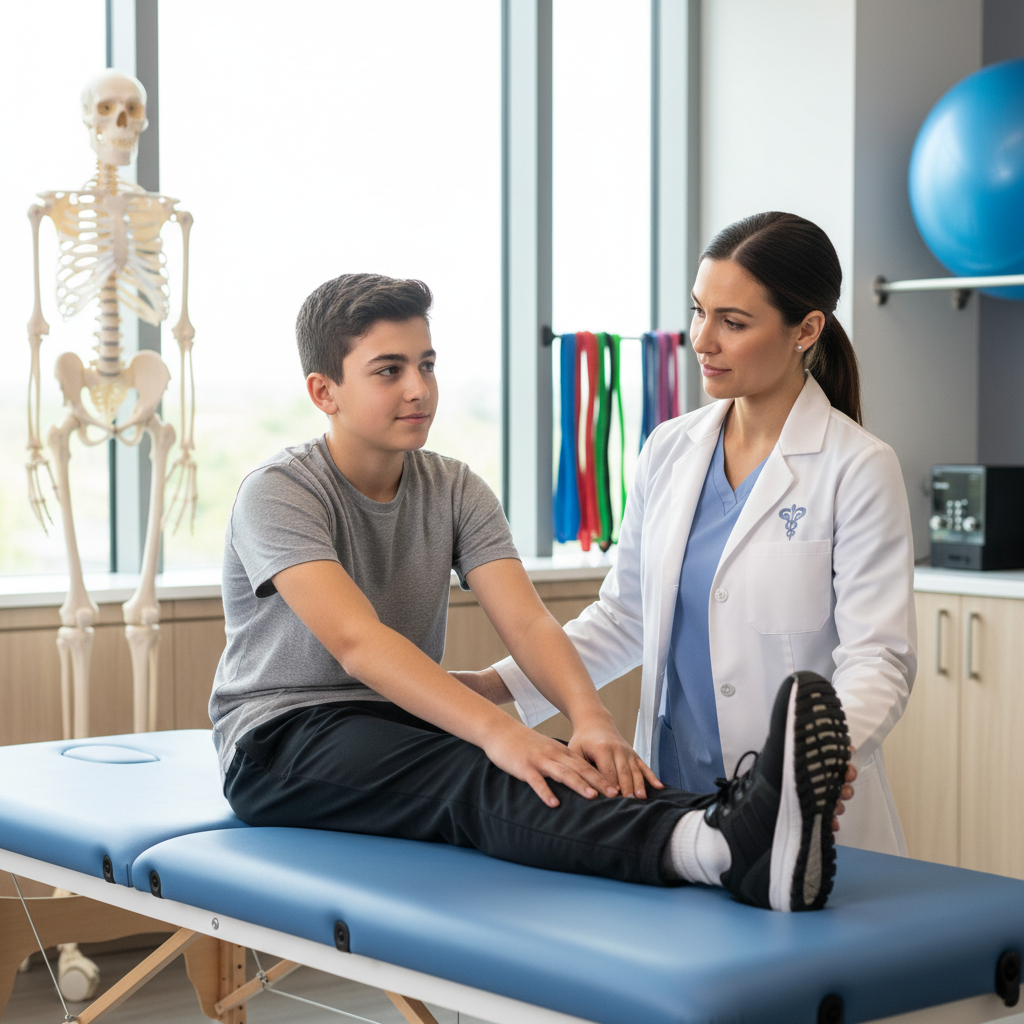
Since the muscles are often lagging behind bone growth, they become incredibly hypertonic (tight). We utilize soft tissue techniques to help relax these muscles and alleviate the tension on the growth plates. This not only reduces pain but also improves the range of motion, allowing for safer athletic performance.
Practical Tips for Parents at Home
While clinical care is vital, there is much that can be done at home to support a growing athlete. I always advise my Marlboro families to focus on these four pillars:
- Prioritize Dynamic Stretching: Encourage your child to perform dynamic movements (leg swings, arm circles) before practice to prepare the tight tissues for activity. Static stretching is best reserved for after the game.
- Monitor Sleep Patterns: Growth happens during sleep. If your child is going through a spurt, they may need an extra hour of rest to allow the body to recover and the nervous system to integrate the day’s movement.
- Hydration and Nutrition: Growing bones and stretching muscles require minerals and hydration. Ensure they are getting enough calcium, magnesium, and water to support tissue elasticity.
- Listen to ‘Achy’ Pain: Don’t dismiss heel or knee pain as just ‘growing pains.’ If the pain is localized and persistent after activity, it’s a sign that the growth plate is under too much stress.
Frequently Asked Questions
How can I tell if my child is currently in a high-risk growth phase?
Look for signs beyond just height. Common indicators include a sudden increase in appetite, increased sleep requirements, and a noticeable decrease in coordination during their sport. If they seem to be ‘tripping over their own feet’ more often, they are likely in a peak growth phase.
Is chiropractic care safe for a growing teenager?
Absolutely. Chiropractic care for youth is very different from care for adults. We use much lighter force and focus heavily on joint mobility and neurological feedback. It is a non-invasive, drug-free way to manage the physical stresses of puberty.
Can chiropractic care help with Osgood-Schlatter or Sever’s disease?
Yes. By improving the alignment of the hips, knees, and ankles, and by addressing the tension in the quadriceps and calves, we can significantly reduce the ‘pull’ on the growth plates, allowing the inflammation to subside and the athlete to return to play sooner.
Should my child stop playing sports during a growth spurt?
Not necessarily. In most cases, we want them to stay active but may recommend modifying their training volume. The goal is to avoid ‘overloading’ the tissues while they are in a state of flux. A movement check can help determine if they need a temporary reduction in high-impact activity.
How often should an athlete see a chiropractor during a growth spurt?
Every child is different, but during a rapid growth phase, a ‘tune-up’ every few weeks can be incredibly beneficial. This allows us to catch minor misalignments or movement compensations before they turn into painful injuries.
Conclusion: Let’s Keep Marlboro’s Athletes on the Field
Growth spurts are a natural part of the journey to adulthood, but they don’t have to be a period defined by injury and frustration. By being proactive and ensuring your child’s body is balanced and their nervous system is calibrated, we can help them navigate these changes with confidence and strength. At HealthSource Chiropractic of Marlboro, we are dedicated to supporting our local families and keeping our young athletes performing at their best. I invite you to schedule a growth-phase movement check for your child today to help reduce their injury risk and keep them in the game.