
Why Coordination Matters in Childhood Development
🎉 New Patient Special: Full exam + X-rays if needed for only $29 (regular fee $189) — Marlboro, NJ
Book for $29 →As a chiropractor practicing in Marlboro, NJ, I see a lot of adults walking through my door with back pain, neck stiffness, and postural issues that trace back further than they realize—often to childhood. Over the years, I’ve become increasingly passionate about a topic that doesn’t get nearly enough attention in mainstream pediatric care: coordination and balance development in children. As a parent and a clinician, I’ve watched firsthand how early movement patterns shape everything from athletic performance to self-esteem, posture, and even injury risk decades later.
In this post, I want to walk you through why coordination matters so much in childhood, what can interfere with its development, how chiropractic care fits into the picture, and what you as a parent can start doing today—right here in Marlboro—to support your child’s physical growth.
The Foundation: Balance and Coordination in Early Development
Balance and coordination aren’t just about being “good at sports.” They are foundational neurological skills that involve the vestibular system (inner ear), proprioception (body awareness), vision, and the nervous system all working together. When these systems are functioning well and communicating efficiently, a child moves through the world with confidence—running, climbing, catching a ball, riding a bike, even sitting still in a classroom chair.
In my practice, I often explain to parents that coordination is essentially the nervous system “practicing” efficient communication between the brain and the body. Every time a toddler stumbles and rights themselves, or a seven-year-old learns to pump their legs on a swing, new neural pathways are being reinforced. This is why the early years—roughly ages 2 through 10—are so critical. The window for building strong foundational movement patterns is wide, but it’s not infinite.
Why This Matters Long-Term
Children who struggle with coordination early on often avoid physical activity, which compounds the problem. Less movement means fewer opportunities to refine motor skills, which can lead to a cycle of physical avoidance, weight gain, poor posture, and even anxiety around group activities like gym class or team sports. I’ve had teenage patients in my Marlboro office whose chronic low back pain and rounded shoulders were, in part, a result of years of sedentary compensation for early coordination struggles that were never addressed.
Movement Confidence: More Than Just Physical Skill
One of the concepts I emphasize most with parents is movement confidence. This is a child’s internal sense that their body can do what they ask of it. Movement confidence is built through repetition, positive reinforcement, and—critically—a nervous system that is functioning without interference.
Children who lack movement confidence often exhibit:
- Reluctance to try new physical activities or sports
- Excessive caution on playground equipment
- Frustration or emotional outbursts during PE class or family activities
- A tendency to sit out rather than participate
I’ve worked with several families whose kids seemed “unathletic” or “clumsy,” only to discover through a movement screening that subtle imbalances in their spine and nervous system were affecting their proprioceptive feedback. Once addressed through chiropractic care and targeted movement exercises, these same kids often surprise their parents by suddenly wanting to join soccer or gymnastics.
Physical Literacy: Building a Movement Vocabulary
Physical literacy is a term borrowed from sports science that I’ve come to love using with parents. Just as children build a vocabulary of words, they also build a “vocabulary” of movement patterns—crawling, jumping, hopping, throwing, catching, balancing, twisting. The broader this movement vocabulary, the more adaptable and resilient a child’s body becomes.
How Physical Literacy Develops
Physical literacy doesn’t develop in isolation—it requires varied, unstructured play as much as structured activities like organized sports. Climbing trees, playing tag, riding bikes on uneven trails, and even rough-and-tumble play with siblings all contribute to a rich foundation of physical literacy. Unfortunately, with more screen time and structured, single-sport specialization happening earlier, many kids today have a narrower movement vocabulary than previous generations.
In my clinical experience, children with limited physical literacy often show compensatory movement patterns—overusing certain muscle groups while neglecting others—which can create asymmetries that persist into adulthood if not corrected early.
What Causes Coordination Delays?
Parents often ask me what causes coordination struggles in the first place. The honest answer is that it’s usually multi-factorial. Some contributing factors I regularly discuss with families include:
- Birth trauma or difficult delivery, which can create subtle spinal misalignments affecting nervous system function from day one
- Reduced tummy time or delayed crawling, both of which are critical for cross-body neural development
- Excessive time in containers—car seats, bouncers, and swings—that limit a baby’s opportunity to move freely
- Increased screen time, replacing active play with sedentary entertainment
- Underlying vestibular or sensory processing differences, which may require a multidisciplinary approach
It’s important to note that not every coordination challenge has a single, simple cause—but many of the physical contributors can be assessed and supported through chiropractic care and structured movement.
How Chiropractic Care Supports Healthy Coordination Development
As a chiropractor, my role isn’t to diagnose neurological or developmental disorders—that’s outside my scope and best left to pediatricians and specialists. What I do focus on is the health and function of the spine and nervous system, which serves as the communication highway between the brain and the rest of the body.
Ready to Feel Better? Start for Just $29
Your first visit includes a full exam + X-rays if needed for only $29 — regular fee $189. Same-day appointments available at our Marlboro, NJ clinic.
Valid for new patients only at participating locations. Due to federal regulations, this offer cannot be applied to patients enrolled in Medicare, Medicaid, or other federal healthcare programs. Not valid for ACN members. New Patient offer pricing varies by location. Insurance acceptance varies by location.
When a child’s spine has areas of restricted movement (what we call subluxations), it can interfere with proprioceptive feedback and nervous system efficiency. In my Marlboro practice, I perform gentle, age-appropriate adjustments designed specifically for children—nothing like the adjustments adults receive. These are low-force, precise, and tailored to a child’s developing musculoskeletal system.
What Patients Can Expect During a Visit
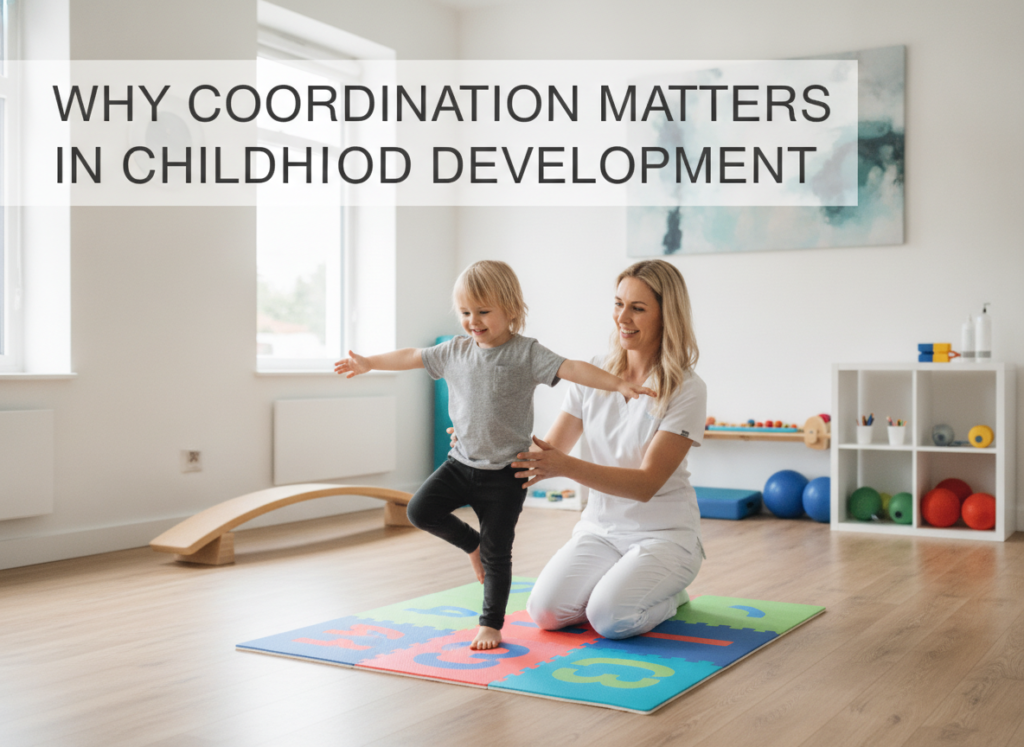
For families visiting my office for the first time, I always start with a thorough movement and postural screening. This includes observing gait, balance on one foot, crossing the midline (like touching the opposite elbow to knee), and basic reflex patterns. From there, I develop a personalized plan that may include gentle chiropractic adjustments, specific exercises, and recommendations for activities at home that reinforce healthy movement patterns.
Most parents are pleasantly surprised at how gentle pediatric chiropractic care actually is. Sessions are brief, comfortable, and many kids genuinely enjoy coming in.
Red Flags Parents Should Monitor
While some variation in development is completely normal, there are certain signs that warrant a closer look. I encourage Marlboro parents to watch for:
- Persistent toe-walking past age 3
- Difficulty catching a large ball by age 5-6
- Avoiding stairs or needing to hold the railing well past toddlerhood
- Frequent tripping or falling compared to same-age peers
- Difficulty with activities requiring crossing the midline (like touching the right hand to the left foot)
- Strong preference for one side of the body in almost all activities
- Noticeable asymmetry in posture, such as one shoulder consistently higher than the other
If you notice several of these signs, it’s worth having your child evaluated—not to alarm you, but because early intervention almost always yields better outcomes than waiting.
Actionable At-Home Tips
Here are some simple strategies I recommend to Marlboro families to support coordination development between visits:
- Prioritize unstructured outdoor play—local parks like Wolf Hill Park or Vanderburg Farm Park are great spaces for climbing, running, and balance play
- Limit screen time in favor of active play, especially before age 8
- Incorporate crossing-midline games, like “cross-crawl” marches or obstacle courses at home
- Encourage a variety of movement—swimming, biking, dance, martial arts—rather than single-sport specialization too early
- Practice balance activities, like standing on one foot while brushing teeth
A Local Approach to Pediatric Movement Health
Having practiced in Marlboro for years, I’ve had the privilege of working with generations of local families. I understand the pressures parents face here—competitive youth sports leagues, packed school schedules, and the desire to give kids every advantage. My goal is to help ensure that as your child grows, their nervous system and spine are supporting—not hindering—their physical potential.
Frequently Asked Questions
At what age should I start thinking about my child’s coordination development?
Coordination development begins in infancy. Tummy time, crawling, and early movement exploration all lay the groundwork. However, it’s never too late to start supporting healthy movement patterns, even into the school-age years.
Is chiropractic care safe for young children?
Yes. Pediatric chiropractic adjustments are gentle, low-force, and specifically tailored to a child’s developing spine. They are very different from adult adjustments and are designed with safety and comfort as the top priority.
My child seems clumsier than their peers. Should I be worried?
Not necessarily—there’s a wide range of normal development. However, if clumsiness is persistent, worsening, or accompanied by other red flags mentioned above, a movement screening can provide clarity and peace of mind.
How is a pediatric movement screening different from a regular pediatrician visit?
While pediatricians assess overall health and developmental milestones, a movement screening in my office focuses specifically on spinal function, balance, gait, and proprioceptive feedback—areas that directly affect coordination.
Can improving coordination really help with things like handwriting or focus in school?
Absolutely. Coordination, midline crossing, and core stability all play a role in fine motor control and sustained attention. Many parents report improvements in these areas after addressing underlying movement issues.
How many visits does it typically take to see improvement?
Every child is different, but many families begin noticing changes in confidence and movement quality within 4-6 visits. I always tailor the frequency and approach to each child’s specific needs.
Every child deserves the opportunity to move through the world with confidence and freedom. Supporting healthy coordination early on is one of the most valuable investments we can make in a child’s long-term physical and emotional well-being.
Take the Next Step
If you’re a Marlboro parent who has noticed any of the red flags mentioned above—or you simply want to give your child the best possible foundation for physical confidence—I’d love to help. Schedule a pediatric movement screening at HealthSource Chiropractic of Marlboro, NJ today, and let’s work together to support your child’s healthy development, one step at a time.